THREE DIMENSIONAL FIGURES
Definition Of Three Dimensional Figures
Three-dimensional figures are those figures that do not lie in a plane
The dimensions of three-dimensional figures are length, width, and height
Examples of Three Dimensional Figures
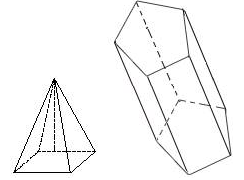
Video Examples: Names of Three-Dimensional Figures
Solved Example on Three-dimensional Figures
Ques: Which of the three-dimensional figures do not have a polygonal base?
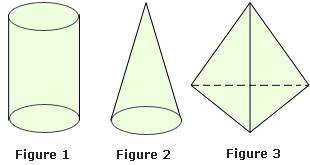
Choices:
A. Figure 1
B. Figure 2
C. Figure 3
D. Figure 1 & Figure 2
Correct Answer: D
Solution:
Step 1: Polygon is a closed figure formed by joining at least 3 line segments.
Step 2: Figure 1 is a cylinder with circular base.
Step 3: Figure 2 is a cone with circular base.
Step 4: Figure 3 is a triangular pyramid with triangular base.
Step 5: Circle is not a polygon.
Step 6: So, Figure 1 and Figure 2 do not have polygonal base.
Quick Summary
- Three-dimensional figures have length, width, and height.
- They occupy space and don't exist on a flat plane.
- Examples include cubes, spheres, cones, and cylinders.
🍎 Teacher Insights
Use real-world objects to demonstrate different 3D shapes. Hands-on activities like building shapes with nets can enhance understanding. Emphasize the difference between 2D representations and actual 3D objects.🎓 Prerequisites
- Basic shapes (squares, circles, triangles)
- Understanding of length, width, and height
- Basic spatial reasoning
Check Your Knowledge
Q1: Which of the following is NOT a three-dimensional figure?
Q2: A three-dimensional figure has which of the following?
Frequently Asked Questions
Q: What are the basic dimensions of a 3D figure?
A: The basic dimensions are length, width, and height.
Q: How do 3D figures differ from 2D figures?
A: 3D figures have volume and exist in space, while 2D figures are flat and exist on a plane.